

If you’ve suffered a major disaster at home such as a flood, fire, or theft, you might wonder what happens after the home insurance adjuster comes out. A visit from an insurance adjuster is just one part of getting your claim processed by an insurance company, but it’s not always the last step in that process!
Note a few tips that will help you better understand what to expect before, during, and after the insurance adjuster visits, and what to do if you disagree with their assessment and payment offered by your policy provider. This will ensure you prepare for their visit and do everything possible to secure a fair compensation for your loss.
How Do Insurance Adjusters Investigate?
To better understand what happens after a home insurance adjuster comes out, what they look for when they visit your home, and what happens after they leave, it’s good to note their entire process from start to finish. When your insurance company receives notice from you that you need to file a claim for loss or damages, it will assign the claim to an adjuster, either one of its own staff or an independent adjuster it hires.
The adjuster first starts their investigative process by reviewing your policy, so they understand what’s covered, what’s not covered, and those coverage limits. They will also review your claim or what’s called a loss notice, noting itemized damages, reason for the loss, and other such details.
Once the adjuster has reviewed your policy and claim, they might settle the entire matter over the phone; this is typical for small claims of just a few hundred dollars or so. For instance, if you had a stovetop fire and are only claiming the stove itself as a loss, the adjuster might quickly and easily sign off on reimbursing you for the cost of a new stove.
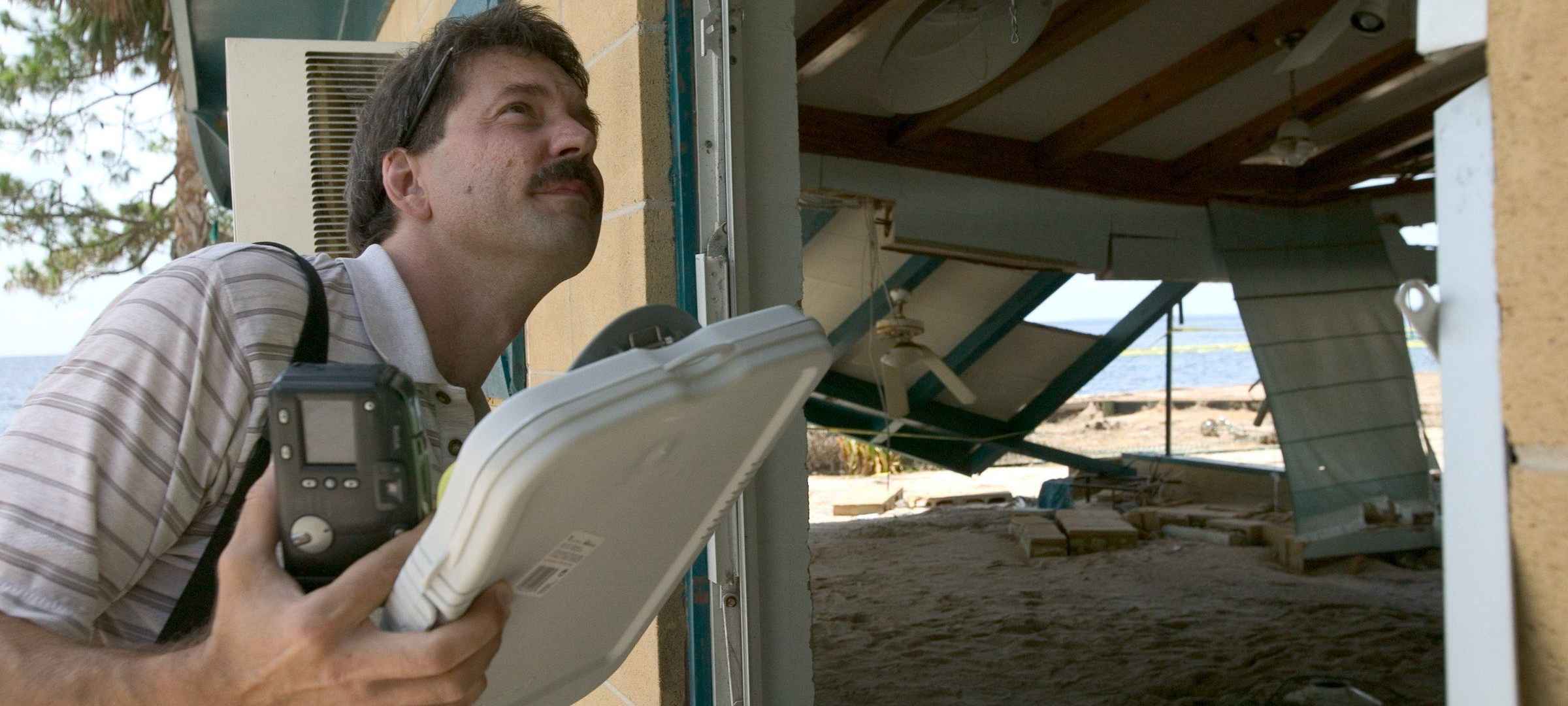
However, for larger claims, the adjuster will usually meet with you in person and visit your home to inspect the damage and your claimed loss. They will usually ask you questions about what caused the loss, your property’s condition before the loss occurred, and so on.
An insurance adjuster will also want to inspect your property and take pictures of the damaged property, or otherwise note and record your loss for themselves. While this might seem intrusive, they do have the right to confirm your claim and assess your loss and property damage!
How Do Adjusters Determine Damage?
It’s vital for homeowners to note that the insurance company’s adjuster doesn’t work for you, and their job isn’t to get you full compensation for your loss or damages; they work for the insurance company, which has an interest in paying no more than it believes it owes. This doesn’t mean that adjusters lie or are in any way dishonest about their findings, but every judgment call about the cause of the damage, the scope of the repairs and the value of your belongings affects your payout, and those calls often go the insurer’s way.
As an example, if the contents of your closet were ruined in a house fire, the adjuster might argue that you should be compensated for the current value of your clothing items and not the cost of replacing them. So, they might offer $50 for an older coat, or what that coat would sell for today, rather than offering the $200 it would require to replace that coat with something new. If you have a replacement cost policy, that withheld difference is often recoverable depreciation: you can claim it once you replace the item, so read your policy and keep your receipts.
This approach varies from one adjuster to another and according to your claim, but understanding whose interests the adjuster represents can help you better understand the process and what to expect. Knowing that the insurance company’s adjuster doesn’t work for you can also help you know when it’s time to call a public adjuster, who works for you and can negotiate on your behalf.
What Happens If I Don’t Agree With a Home Insurance Adjuster?

When your insurance company presents you with a payout offer that you think is unfair or too low, you’re not without options. You can attempt to negotiate with the insurance company’s adjuster, but it’s vital you note how to do so effectively, as simply calling them on the phone and demanding more money is probably not going to work!
How to deal with a claims adjuster
When dealing with a claims adjuster, first ensure you’ve reviewed your policy and know its limits and exclusions. Many policies set low limits for items such as fine art, expensive jewelry, and the like unless they are listed on a separate rider or policy, and some exclude certain items altogether.
In other words, don’t assume that your insurer must compensate you for overly expensive items or even every item damaged or lost in a fire, due to theft, and the like! Check your policy for any exclusions and provisions before contacting the adjuster.
It’s also vital that you understand your policy limits, deductibles, and other such amounts. An insurance company is not bound to pay out any amount past your policy limits, so if they’ve offered the maximum coverage on your policy, that might be all the money to which you’re entitled.
How to argue with an insurance adjuster
Ask the adjuster to explain, in writing, how they arrived at their number, and answer it with evidence of your own: contractor estimates, receipts, photos and the policy language that supports you. If you and the insurer agree the damage is covered but cannot agree on how much it is worth, many policies have an appraisal clause. Under it, each side hires its own appraiser, and the two appraisers choose an umpire to settle the amounts they cannot agree on. Policies usually require each appraiser to be independent or disinterested, and how appraisal works varies by policy and by state, so read your policy’s clause before you invoke it.
The person who usually works for you through all of this is a public adjuster: a licensed adjuster who works for the policyholder and not the insurance company.
A public adjuster cannot “force” your insurance carrier to offer a higher amount, but their work does offer you the best chance of securing a higher payout. Note how and why that is, and when it’s beneficial to hire a public adjuster:
- Since public adjusters are very familiar with insurance policies, they can review your policy and its language and terminology, and note any coverage you’re overlooking.
- Your adjuster can also note any paperwork or other information you might have neglected sharing with your insurer, and which can hold up your claim or have them offer a lower amount. This might include receipts for certain services or products you needed because of that loss or damage, recent appraisals of certain property, and the like.
- A public adjuster can review your loss notice or claim, and offer adjustments to property values, expenses you’ve overlooked, and anything else covered by your policy.
- Your adjuster can negotiate with the insurance company’s adjuster when it comes to their valuation of your property. For example, an insurance adjuster might offer a lowball compensation amount for fire damage cleanup, and your adjuster might counter-argue with quotes from nearby contractors for that service.
If your property loss is significant and you believe that your insurance company has not offered fair compensation, and you are not successful in negotiating with them yourself, it’s time to call a public adjuster. Public adjusters are usually paid a percentage of the settlement rather than a fee up front, so you pay nothing unless the claim pays. Fee limits and licensing rules for public adjusters vary by state; your state’s department of insurance can confirm that an adjuster is licensed where your property is.
Can a Homeowner Profit From an Insurance Claim?
Profiting from an insurance claim is a complicated business, as a homeowner should never lie about losses, intentionally inflate the value of certain items, or damaged items themselves in order to make a claim against their insurance! Depending on the circumstances, these actions can all be considered insurance fraud, which is a very serious crime.
However, a homeowner might be able to pocket some money they’ve received legally after filing a claim. For instance, if your insurer pays you $500 for clothes and furniture lost in a house fire, you aren’t necessarily obligated to spend all that money on new clothes and replacement furniture. Keep in mind, though, that under many replacement cost policies the insurer pays the depreciated value first and pays the rest only after you replace the items.
In some cases, an insurance policy will have provisions in place that prevent a homeowner from profiting from losses. For instance, your policy might stipulate that you use a licensed contractor for home repair, rather than performing the work yourself and pocketing money meant to hire a contractor. Some policies even stipulate that the money is not paid to the homeowner but directly to a contractor.
Before you do anything to profit from an insurance claim, speak to an attorney. He or she can review your policy details and local laws, and note if your actions might be deemed illegal or if they’re allowed under the law and your policy provisions. A homeowner should also note that their insurance premium might increase based on their claim, so it can be a long-term financial mistake to “pad” your current claim as much as possible, hoping to pocket those extra dollars!
How Long Does the Home Insurance Claim Process Take?
Most states have laws in place that require insurance companies to handle claims within a reasonable amount of time, and many set specific deadlines for acknowledging a claim, responding to your communications, and accepting or denying it once you have submitted proof of your loss.
These deadlines vary from state to state, and they can change. If you think your insurance company is taking far too long to respond to your claim, your state’s department of insurance can tell you the rules where you live and accepts complaints about insurers, or you can contact an attorney or a licensed public adjuster. He or she will be familiar with local regulations and how to address your insurance carrier as needed, to speed up the process and receive a timely response to your claim.
Should I Accept the First Offer From an Insurance Company?
Whether or not you should accept any offer from an insurance company is your decision, and that first offer your insurer sends you isn’t always unfair! If your claim is somewhat simple and you’ve provided your insurer with all needed paperwork, they might provide you with a fair offer for compensation.
You might also accept their first offer if you know it’s a bit lower than it should be, but not so low that it’s unfair or worth fighting. For example, if you’ve gone through a small house fire and your insurer offers a hundred dollars less than you think your losses are worth, you might decide that it’s worth sacrificing that hundred dollars rather than waiting for your compensation or going through a mediation process.
However, it’s also important for homeowners to realize that they are not obligated to accept an offer from their insurer without trying to negotiate for a higher payout! A policyholder can contact the insurance company’s adjuster themselves and try to negotiate a higher offer or hire a public adjuster, as said, who can negotiate for them. Before you accept any payment, read anything you are asked to sign: a release or a check marked “final” can close the claim.
While negotiating a claim can add time before you receive your final payout, it can be worth it if a public adjuster can secure you a significantly higher settlement. It's a pretty great advantage when considering what happens after the home insurance adjuster comes out. They can also alleviate of the burden of having to negotiate with an insurer so you can get back to recovering after a fire, flood, or another such disaster, which can make that slight delay even more worthwhile!
Can an Insurance Company Deny a Claim?
If an insurer decides that your claim doesn’t fit your policy, they can deny it. A few common reasons for a carrier to deny a homeowners insurance claim include:
- If you were negligent in maintaining your home or did something directly that resulted in a flood, fire, or other such disaster, the policy carrier might deny your claim. For example, if you ignored a leaking plumbing pipe which then eventually burst, your policy carrier might deny your claim based on you neglecting those needed repairs. That's information that will be presented in what happens after the home insurance adjuster comes out.
- Along with negligence, a policy carrier might deny claims arising from poor-quality DIY repairs. If you attempted to fix your own water heater, as an example, and it then burst and flooded the home, your carrier might deny your claim for damages.
- A non-covered peril refers to something not covered by your insurance policy, and your carrier will deny claims for any such damages. For instance, many homeowners policies don’t cover termite or carpenter ant damage, or damage caused by earthquakes.
- An insurance company might also deny a claim if you wait too long to notify them and file your loss notice.
If you’re still curious about what happens after the home insurance adjuster comes out or have any questions about filing a claim and receiving fair compensation, contact a public adjuster. Melo Property Claims offers a free claim review in the states where we are licensed.


